PEGGASUS — Rocket Design Project
Project Overview
In my senior year of high school, I participated in a rocket-design competition where, as a team of four, we designed and built a rocket named PEGGASUS to satisfy a strict set of requirements:
- Apogee at 200 m
- Rocket length greater than 1 m
- Flight time between 40 s and 43 s
- Impact speed around 5 m/s
- Payload recovery: return an onboard egg intact using only everyday, off-the-shelf materials
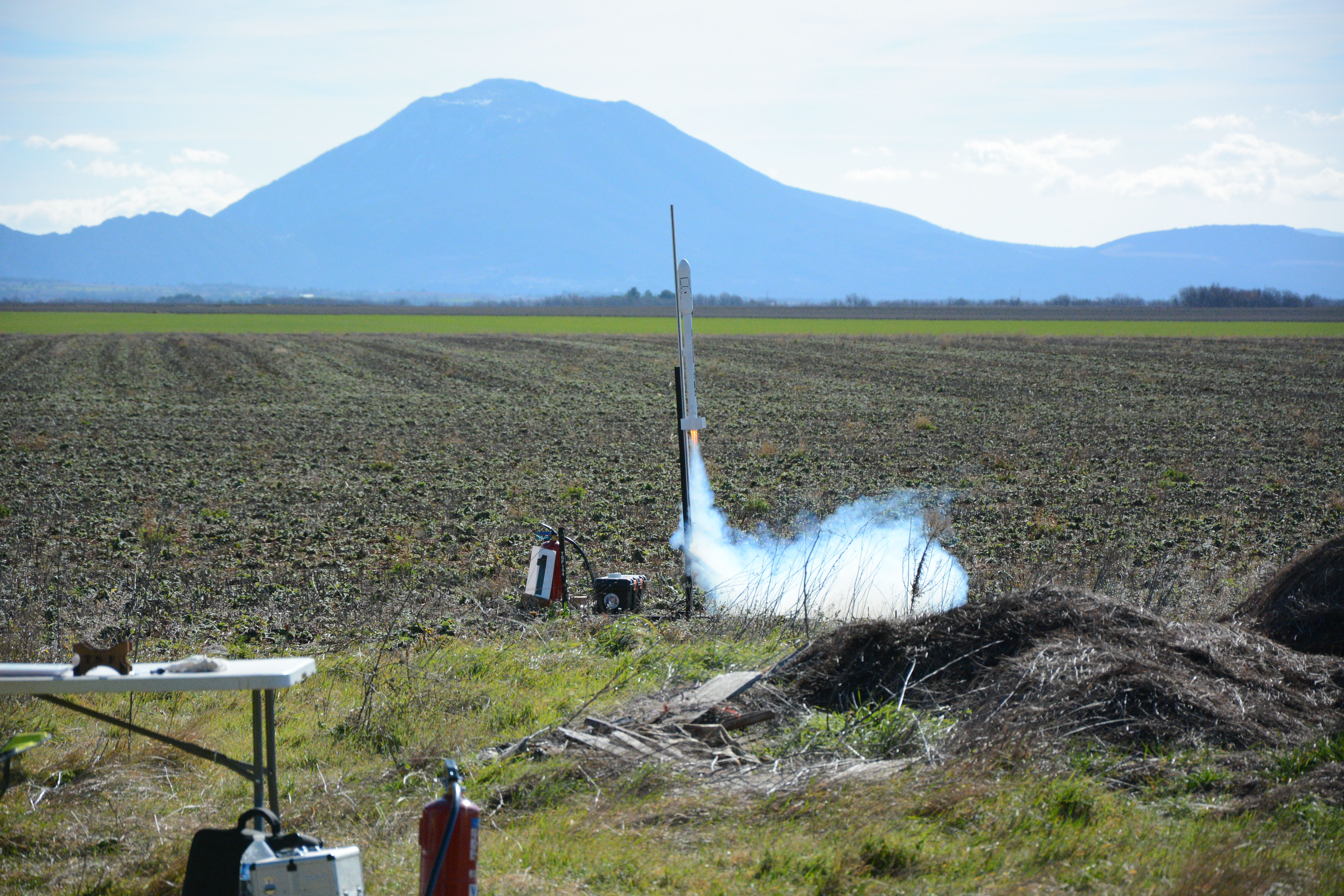 Figure 1 — PEGGASUS at liftoff
Technical contribution
To meet these requirements, we used OpenRocket as the main design tool and followed a simulation-driven process. We ran simulations to converge on a configuration that satisfied the apogee and flight-time constraints. Based on the simulation results, we sized the recovery system accordingly, including a 76 cm diameter parachute to target the required descent profile. We iterated on geometry—nose cone shape, fin planform, and mass distribution—validated apogee, flight time, and stability in simulation, then built the hardware to match the simulated configuration as closely as possible.
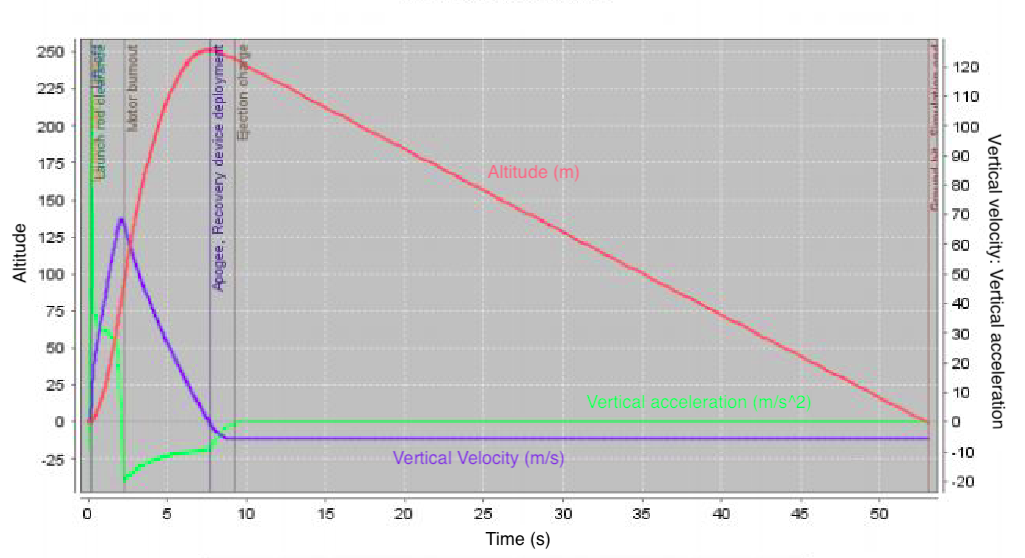 Figure 2 — OpenRocket simulation output
Key design choices
- CAD design: I modeled the nose cone in SolidWorks, optimized its shape for subsonic flight, and 3D-printed it for integration on the rocket.
- Stability and fin sizing: We iterated on the number and type of fins to maintain stability in windy conditions while staying consistent with the simulation model. We chose simple square fins to reduce uncertainty relative to OpenRocket assumptions.
- Payload protection: We designed egg protection using cotton and puffed rice. The puffed rice provided impact damping, while the cotton helped isolate the egg from vibrations.
- Electronics and deployment logic: We implemented a simple Raspberry Pi countdown to trigger (1) ignition at launch and (2) a delayed parachute deployment using a secondary igniter after a fixed delay.
- Integration layout: We defined the internal placement of the electronics, battery, igniters, parachute, and payload to preserve stability and enable reliable parachute deployment, targeting a center-of-mass to center-of-pressure offset below 5 cm.
My results
PEGGASUS launch
- Simulation vs. reality: The propulsion and ballistic phases matched the simulation well overall. The main deviation came from recovery timing: the parachute deployed later than expected.
| Metric | OpenRocket | Altimeter |
|---|---|---|
| Time to trajectory apex | 7.68 s | 7.76 s |
| Maximum altitude reached | 251.8 m | 248 m |
| Liftoff acceleration | 36.6 m·s−2 | — |
| Propulsion phase duration | 2.18 s | — |
| Velocity at the end of propulsion | 66.2 m·s−1 | 72.1 m·s−1 |
| Speed at parachute deployment | 5.5 m·s−1 | 12.4 m·s−1 |
| Impact speed at ground | 5.56 m·s−1 | 7.2 m·s−1 |
| Total flight time | 53.5 s | 41.0 s |
| Altitude at end of propulsion | 96.2 m | — |
- What failed and why: The deployment sequence did not perform as intended because both igniters were powered by the same battery. After the first firing event, the battery likely experienced voltage sag under load and could no longer deliver sufficient peak current to heat the ignition wire quickly enough to initiate the parachute ejection charge. This issue affected roughly half of the teams, as the battery type was imposed and not under our control.
- Conclusion: Despite the recovery issue, the propulsion and ballistic predictions were highly accurate, confirming that the simulation-driven sizing approach was robust and that the main limitation was the deployment power margin rather than the aerodynamic design.
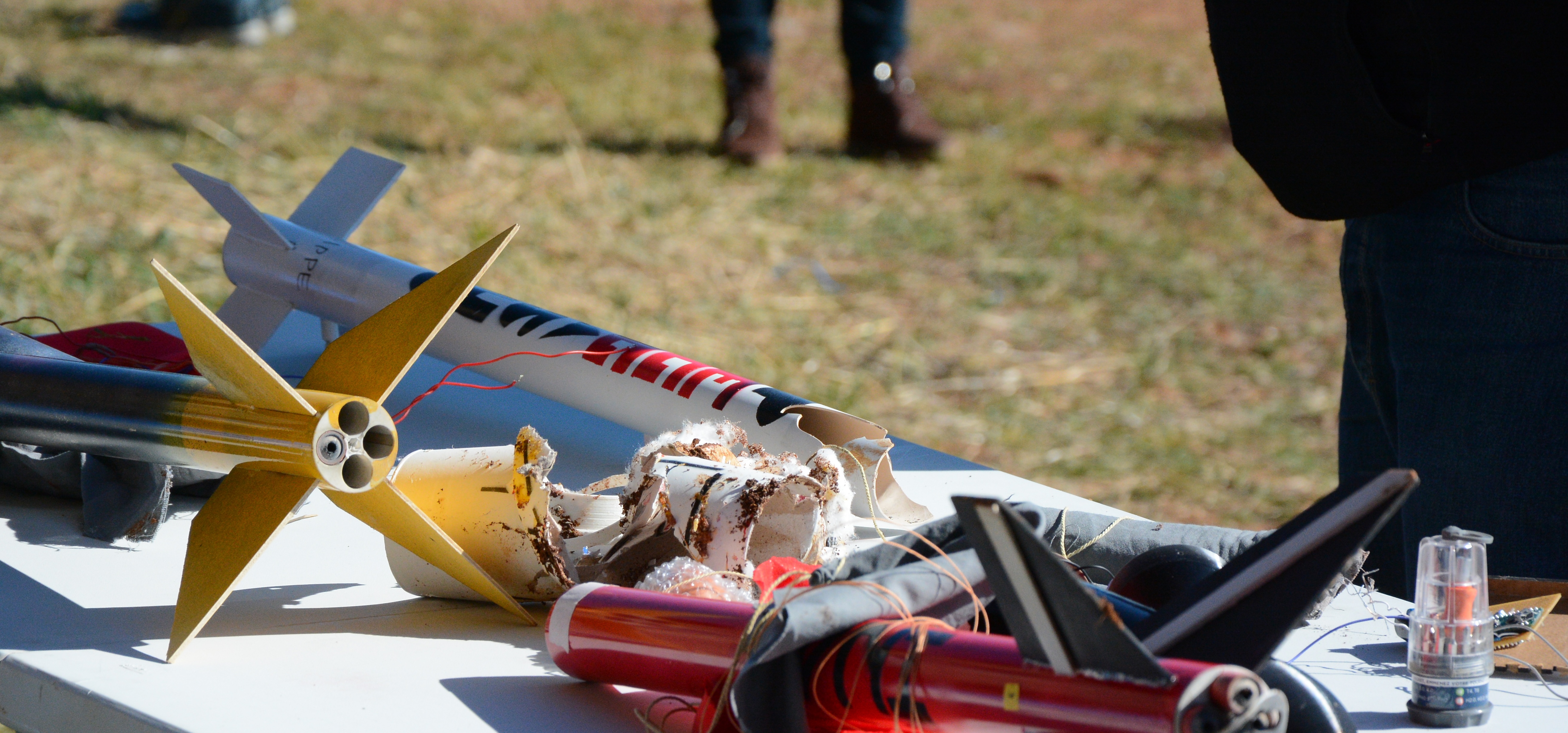 Figure 3 — Post-flight condition (after a rapid unscheduled disassembly)